In this story based around the Innovation Centre, we look more closely at a region and construct a story based on its issues and opportunities.
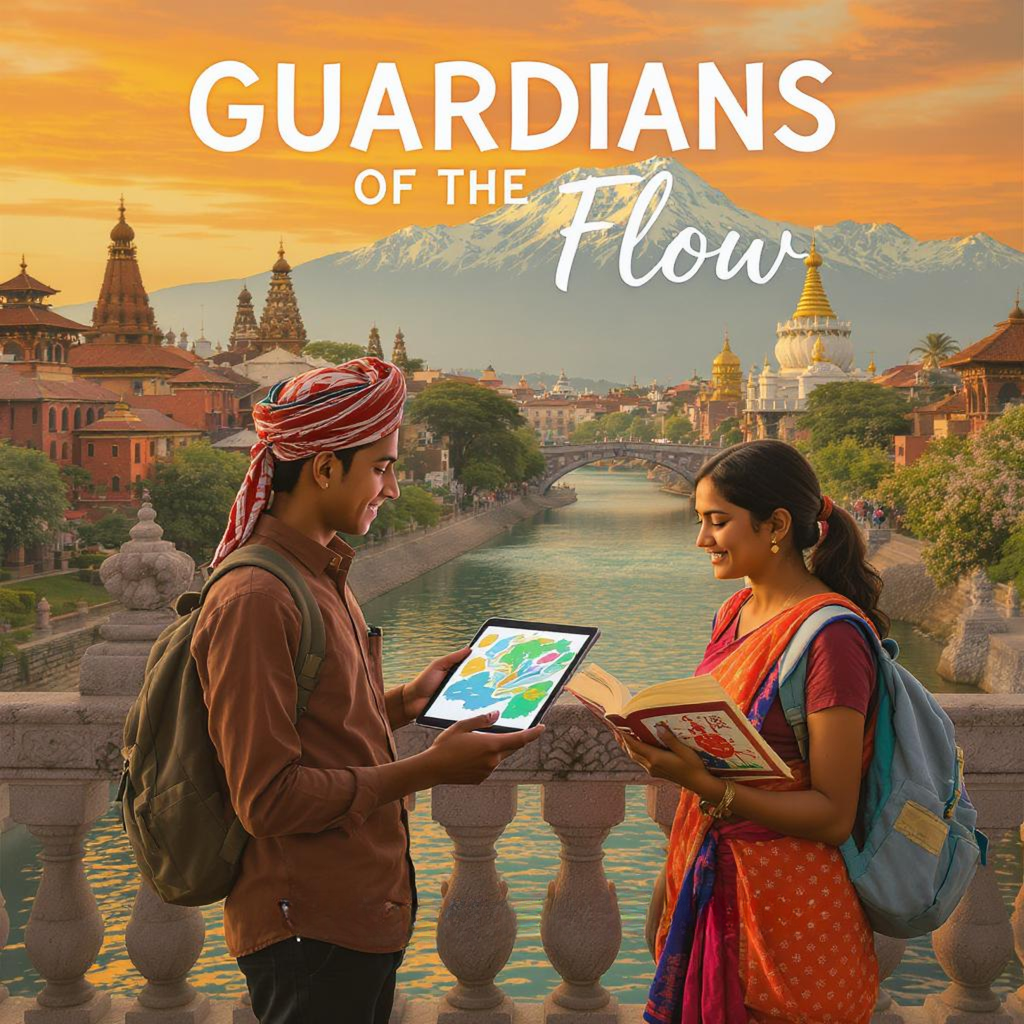
🌄 “Guardians of the Flow”: A Tale of Two Young Innovators from Kathmandu
Chapter One: The Call
In a quiet courtyard in Patan, beneath the rustling leaves of a centuries-old peepal tree, two 14-year-olds sit cross-legged—digitally connected but deeply rooted. Aarav and Maya have grown up with a unique education: mornings in a STEAM-powered school, afternoons in the storytelling halls of Kathmandu’s folklore keepers, and weekends at the Central Innovation Centre—a place that feels more like home than school.
Aarav, a tinkerer with a mind full of algorithms, has built low-cost water sensors using Arduinos with water quality monitors and WiFi capability . Maya, a designer and historian, weaves tales from Nepal’s mythic past into interactive maps and digital murals. Both are curious, bold, and deeply connected to the soul of their city.
Their latest school project takes a serious turn when they visit the Bagmati River for water testing and discover that its pollution levels are worse than predicted—even near sacred sites. Aarav’s sensors spike red. Maya finds an old poem etched into a stone spout, half-buried by waste: “What flows here is memory. Keep it clean, and we keep ourselves whole.”
They decide this isn’t just a project. It’s a mission.
Chapter Two: The Idea That Sparked a Movement
Back at the Innovation Centre, they present a wild idea: combine Nepal’s historical water systems—raj kulo and hiti—with modern AI tools, and build a distributed network of community water stewards across Kathmandu.
They prototype:
- AI-enhanced water mapping kits for schools
- Digital storytelling installations that explain traditional water wisdom
- A youth-designed platform called FlowNepal, which invites communities to upload local water data, rituals, poems, and pledges.
Their concept wins the Centre’s Grand Challenge and gains support from local municipalities, NGOs, and Leapfrog Technology engineers. Maya insists the storytelling must be as powerful as the technology—so they train students to become “innovation narrators,” blending STEAM with civic heart.
Chapter Three: Awakening the Nation
Soon, their work spreads:
- In Pokhara, students use their tools to detect nitrate spikes and rally a neighborhood clean-up.
- In Bardiya, AI-powered sensors protect rainwater harvesting tanks during flood season.
- In Mustang, tales of ancient snow-fed springs become interactive exhibits powered by FlowNepal.
National media calls them “The Guardians of the Flow.” UNICEF invites them to co-design WASH curriculum enhancements. Kathmandu Valley leaders include their platform in the Urban Development Strategy.
But Aarav and Maya keep their vision humble. Their dream? That every school in Nepal becomes a mini Innovation Centre—not just teaching STEAM but solving local problems, powered by culture, creativity, and community.
Chapter Four: The Pilgrimage Home
On their final day of the pilot year, they return to the Bagmati—now cleaner, with student-maintained filtration units and QR-coded poems that tell of the river’s sacredness.
As the sun sets, Maya reads the same stone poem aloud. Aarav adds the final log to their AI dashboard.
Above them, the city lights flicker. Below, the river flows gently—not just with water, but with stories, sensors, and the spirit of two children who believed the past and future could walk hand-in-hand.
 Southport Innovation Centre